3 Best AI Tools for Game Balancing and Analytics
Review the 3 best AI platforms for analyzing player behavior and balancing game difficulty to maximize retention.
Review the 3 best AI platforms for analyzing player behavior and balancing game difficulty to maximize retention.
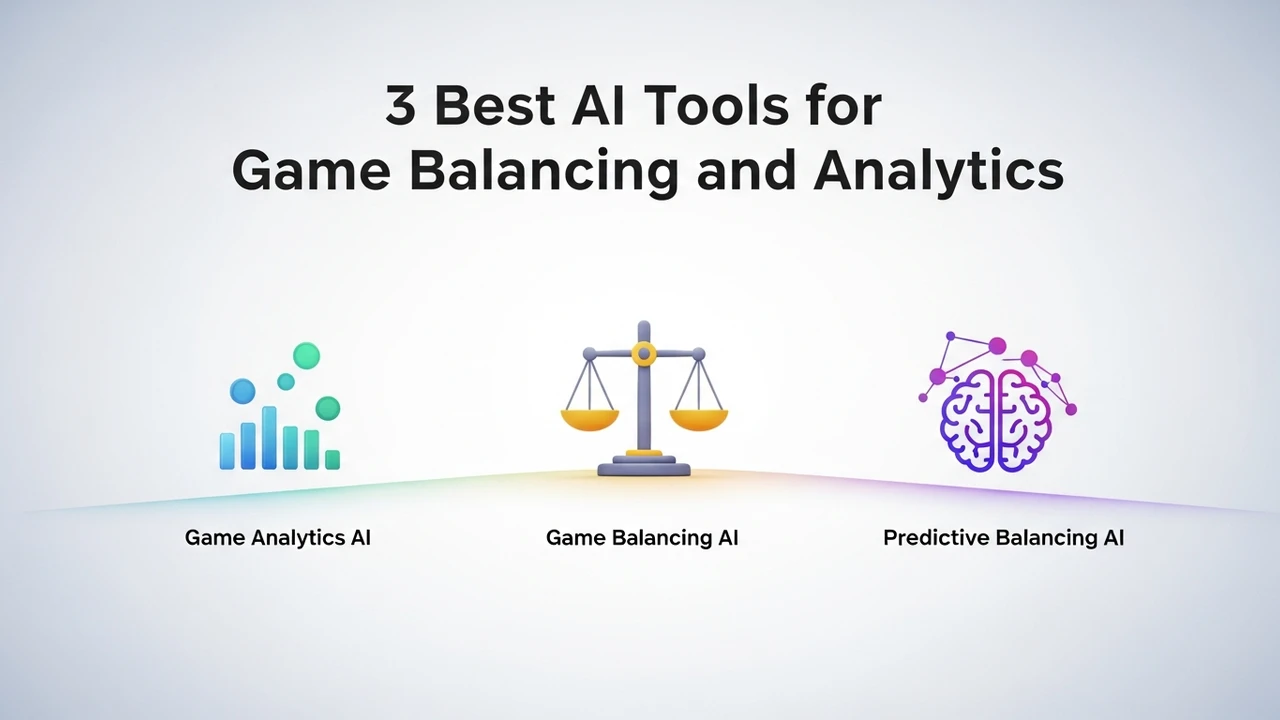
3 Best AI Tools for Game Balancing and Analytics
If you have ever spent months tweaking a game only to find players dropping off at level three, you know the pain of game balancing. It is the silent killer of retention. You want your game to be challenging but fair, and that is where AI-driven analytics come into play. Instead of guessing why players are quitting, you can now use machine learning to see exactly where the friction points are. Let’s dive into the top three tools that are changing the game for developers in the US and Southeast Asia.
Understanding AI Game Balancing and Player Analytics
Game balancing is no longer just about adjusting damage numbers in a spreadsheet. Modern AI tools ingest millions of data points—player movement, inventory usage, death locations, and session length—to build a predictive model of your game's economy and difficulty curve. By using these tools, you can simulate thousands of playthroughs in minutes, identifying bottlenecks that would take human testers weeks to find. Whether you are building a hyper-casual mobile game for the SEA market or a complex RPG for PC, these platforms provide the data-backed insights you need to keep players hooked.
1 GameAnalytics The Industry Standard for Player Behavior
GameAnalytics is arguably the most popular tool for mobile developers. It is incredibly user-friendly and offers a robust free tier that makes it perfect for indie studios. The platform uses AI to track player progression and identify where they are getting stuck. Its 'Funnel Analysis' feature is a lifesaver; it shows you exactly which level or tutorial step is causing the highest churn rate. For developers in Southeast Asia, where mobile gaming is king, GameAnalytics provides excellent regional breakdowns, allowing you to see if players in Indonesia are behaving differently than those in Vietnam.
Use Case: Ideal for mobile games where you need to track daily active users (DAU) and retention rates across different regions. Pricing: They offer a very generous free plan, with enterprise tiers starting at custom pricing based on your monthly active users.
2 Unity Game Simulation for Predictive Balancing
If you are working within the Unity ecosystem, Unity Game Simulation is a powerhouse. This tool uses cloud-based AI to run thousands of simulated game sessions simultaneously. Imagine you want to test if your new weapon is too overpowered. Instead of playing it yourself, you set up a simulation where AI agents play your game with different variables. It will tell you, 'Hey, this weapon increases win rates by 40%,' allowing you to nerf it before it ever hits the live server. It is essentially a 'stress test' for your game's balance.
Use Case: Best for developers who need to test game economy and difficulty curves before launch. Pricing: It operates on a pay-as-you-go model based on the number of simulation hours, making it scalable for both small and large projects.
3 Machinations for Visual Game Economy Design
Machinations is a bit different—it is a visual platform for designing and balancing game economies. You build your game's logic using a node-based interface, and then you run simulations to see how resources flow. If you are building a game with a complex crafting system or a virtual currency, Machinations is the best tool to ensure your economy doesn't collapse. It helps you visualize the 'inflation' of your game items and ensures that players always have a reason to keep grinding.
Use Case: Perfect for RPGs, strategy games, or any title with a complex in-game economy. Pricing: They offer a free version for students and hobbyists, with professional plans starting around $49 per month for advanced simulation features.
Comparing the Top AI Analytics Platforms
When choosing between these three, think about your specific needs. GameAnalytics is your go-to for post-launch player behavior and retention tracking. It tells you what is happening right now. Unity Game Simulation is your pre-launch best friend; it tells you what might happen if you change a variable. Machinations is for the architects—the ones who need to ensure the math behind the game is solid before a single line of code is written. If you are a small team, start with the free tier of GameAnalytics to get a baseline, then move to Machinations if you find your game economy is getting too complicated to manage manually.
Maximizing Retention with Data Driven Decisions
The secret to a successful game in today's crowded market isn't just having a great idea; it is about listening to what your players are telling you through their actions. By integrating these AI tools, you stop making decisions based on gut feeling and start making them based on hard evidence. Whether you are tweaking the difficulty of a boss fight or adjusting the drop rate of a rare item, these platforms give you the confidence to make changes that actually improve the player experience. Keep an eye on your churn data, run your simulations, and don't be afraid to iterate based on what the AI tells you.
:max_bytes(150000):strip_icc()/277019-baked-pork-chops-with-cream-of-mushroom-soup-DDMFS-beauty-4x3-BG-7505-5762b731cf30447d9cbbbbbf387beafa.jpg)