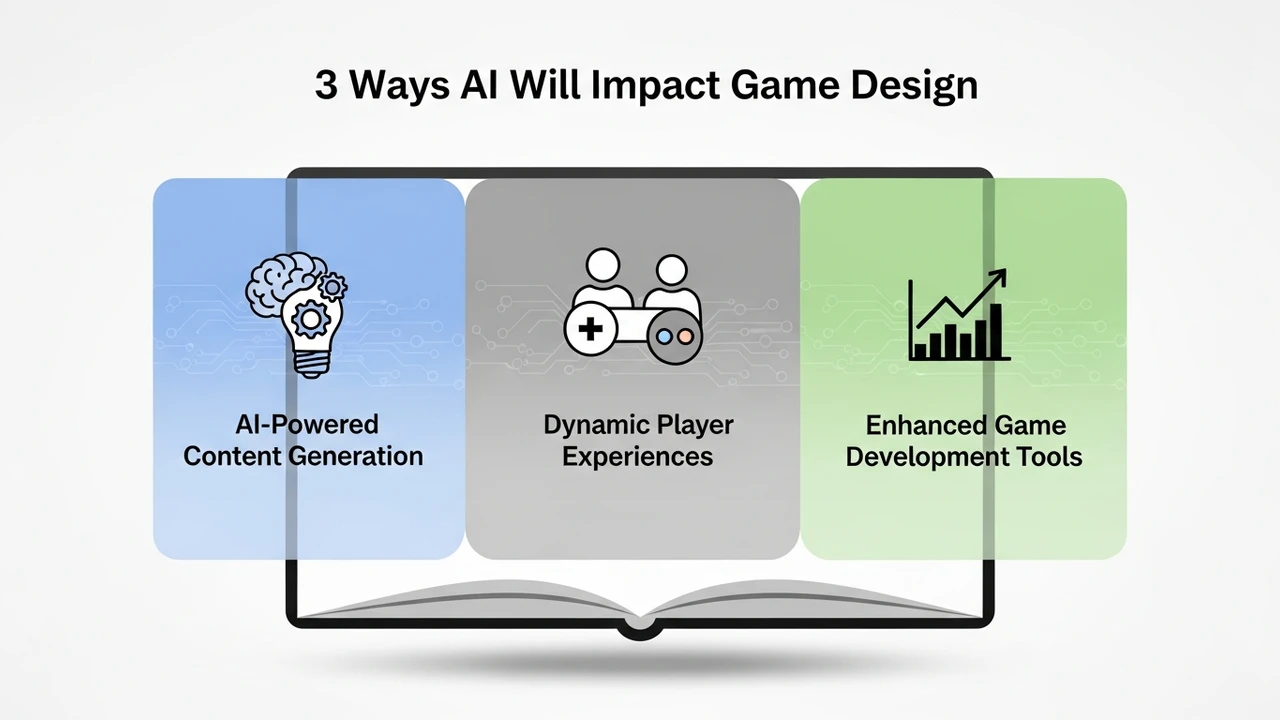
3 Ways AI Will Change the Gaming Industry
Compare the 3 most significant ways AI is expected to transform the gaming industry in the coming years.
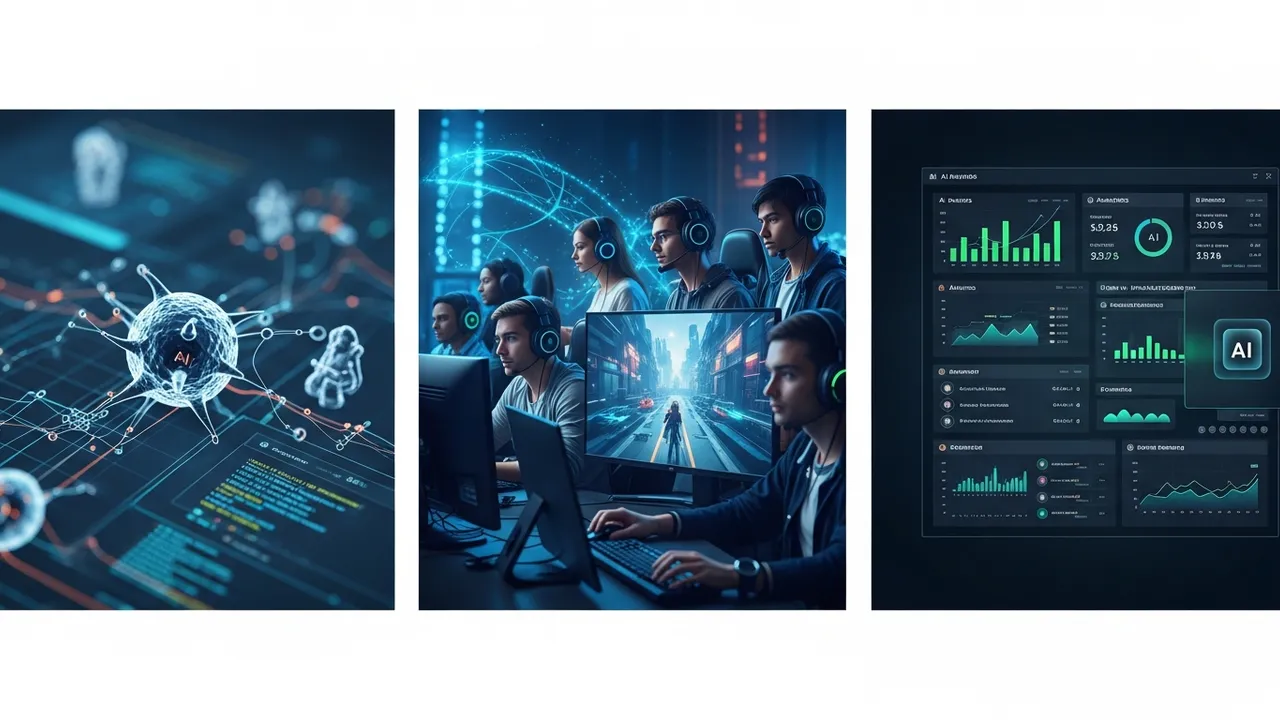
Compare the 3 most significant ways AI is expected to transform the gaming industry in the coming years.
3 Ways AI Will Change the Gaming Industry
If you have been paying attention to the gaming landscape lately, you know that artificial intelligence is no longer just a buzzword. It is the engine under the hood that is about to shift the entire industry into a higher gear. We are moving past the era of scripted NPCs and static environments into a world where games feel alive, reactive, and deeply personal. Let’s dive into the three biggest ways AI is going to flip the script on how we play and create games.
AI Driven Procedural Content Generation and World Building
The first massive shift is in how game worlds are built. Traditionally, developers spent thousands of hours hand-crafting every rock, tree, and quest line. With AI-driven procedural generation, that bottleneck is disappearing. Tools like Unity Muse and NVIDIA ACE are changing the game by allowing developers to generate complex, high-fidelity environments in a fraction of the time. Imagine an open-world RPG where the terrain, the weather patterns, and even the architecture of cities are generated on the fly based on your playstyle. It is not just about size; it is about density and relevance. For indie developers, this is a game-changer. You no longer need a team of 500 to build a world that feels infinite. Products like Scenario.gg are already helping creators generate consistent 2D and 3D assets that fit a specific art style, saving thousands in production costs. Prices for these tools vary, with many offering freemium models for indie devs, while enterprise licenses for studios can run into the thousands per month.
Intelligent NPC Behavior and Dynamic Narrative Systems
Remember the days when you could walk up to an NPC and they would repeat the same three lines of dialogue? Those days are numbered. We are entering the age of the 'Smart NPC.' By integrating Large Language Models (LLMs) directly into game engines, developers are creating characters that can hold real-time, unscripted conversations. Inworld AI is a leader here, providing a platform where you can define a character's personality, backstory, and goals, and the AI handles the rest. You can literally talk to a shopkeeper about the local lore, and they will respond based on their 'knowledge' of the game world. This creates a level of immersion that was previously impossible. When you compare Inworld AI to older, node-based dialogue systems, the difference is night and day. While older systems were rigid and predictable, AI-driven systems are fluid. Pricing for these services is usually based on API usage, often starting with a free tier for developers to experiment, scaling up as your player base grows.
Personalized Player Experiences and Adaptive Difficulty
Finally, AI is going to make games that actually 'know' you. We have all played games that were either too easy or frustratingly difficult. AI-driven analytics platforms like GameDriver or Unity Game Services are using machine learning to monitor player behavior in real-time. If the AI detects you are struggling with a specific boss fight, it might subtly adjust the enemy's aggression or drop a health pack just when you need it most. Conversely, if you are breezing through, it ramps up the challenge to keep you engaged. This is the end of the 'one size fits all' difficulty setting. It is about creating a flow state that is unique to every single player. When you look at the market, tools like Modl.ai are leading the charge in automated testing and player behavior modeling. They help developers understand exactly where players are dropping off and why. These tools are essential for mobile games in the Southeast Asian market, where player retention is the ultimate metric for success. Most of these platforms operate on a subscription basis, often costing anywhere from $500 to $5,000+ per month depending on the scale of your game and the depth of the analytics required. It is a significant investment, but for a game that wants to survive in a crowded market, it is becoming a standard requirement rather than a luxury.
:max_bytes(150000):strip_icc()/277019-baked-pork-chops-with-cream-of-mushroom-soup-DDMFS-beauty-4x3-BG-7505-5762b731cf30447d9cbbbbbf387beafa.jpg)