3 Ways AI Will Change Game Monetization
Compare the 3 most significant ways AI will transform how games are monetized and how players spend.
3 Ways AI Will Change Game Monetization
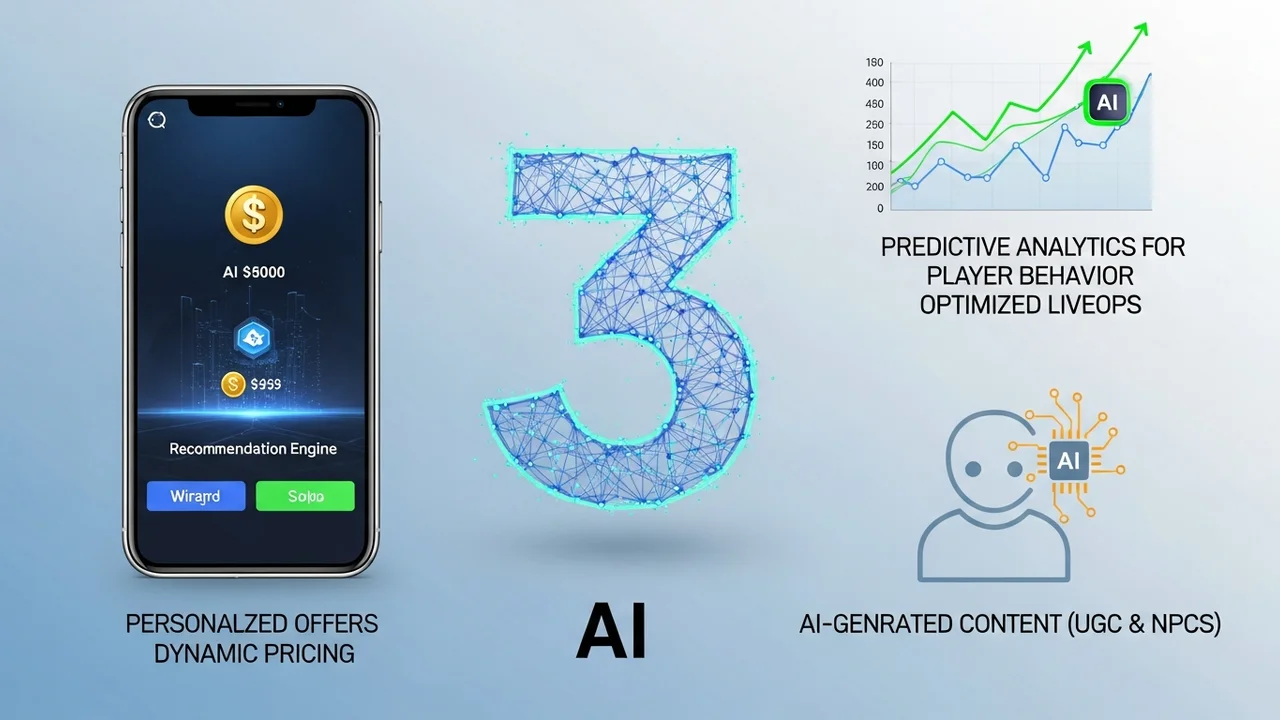
Compare the 3 most significant ways AI will transform how games are monetized and how players spend. As the gaming industry evolves, the traditional "one-size-fits-all" approach to monetization is rapidly becoming obsolete. Developers are now turning to artificial intelligence to create smarter, more personalized revenue streams that respect player agency while maximizing lifetime value.
AI Driven Dynamic Pricing Models for In Game Purchases
Gone are the days when every player saw the same price tag for a skin or a loot box. AI-driven dynamic pricing is revolutionizing how developers approach microtransactions. By analyzing individual player behavior—such as how often they play, their spending history, and their engagement with specific game modes—AI algorithms can adjust prices in real-time. For instance, a player who hasn't logged in for a week might receive a personalized discount on a battle pass to encourage their return, while a "whale" player might be presented with exclusive, high-tier bundles that cater to their specific collection habits.
When we look at tools like Unity Game Services or DeltaDNA, they provide the backbone for this level of personalization. Unity’s predictive analytics can identify which players are likely to churn and trigger a targeted offer before they leave. Compared to traditional static stores, these AI-integrated systems see conversion rates increase by up to 20-30%. Pricing for these services usually starts at a base tier for small studios, often scaling up to thousands of dollars per month for enterprise-level data processing.
Personalized Offer Generation and Predictive Analytics
The second major shift is the move toward hyper-personalized offer generation. Instead of blasting every player with the same generic "Summer Sale" banner, AI models now curate unique storefronts for every single user. If you are a player who loves playing as a healer in an RPG, the AI will prioritize showing you cosmetic items or gear upgrades relevant to that class. This creates a sense of relevance that makes spending feel like a natural extension of gameplay rather than a forced advertisement.
Products like AppLovin’s MAX and IronSource are leading the charge here. They use machine learning to predict the exact moment a player is most likely to engage with an ad or make a purchase. The use case is simple: maximize revenue without ruining the user experience. While these platforms often operate on a revenue-share model, the cost of implementation is offset by the massive lift in Average Revenue Per Daily Active User (ARPDAU). These tools are essential for developers in the Southeast Asian market, where mobile-first gaming dominates and player preferences are incredibly diverse.
Automated Fraud Detection and Economy Balancing
Monetization isn't just about making money; it's about protecting the game economy from inflation and bad actors. AI is now the primary line of defense against "gold farmers" and botting operations that can ruin the value of in-game currencies. By monitoring transaction patterns, AI can flag suspicious activity in milliseconds, ensuring that the legitimate economy remains stable. If the economy is stable, players are far more likely to invest real money into it.
Tools like Sift and GameBlocks are the industry standards for this. They don't just stop fraud; they provide deep insights into how players are trading items, allowing developers to adjust drop rates or currency sinks dynamically. For a mid-sized studio, these services might cost anywhere from $500 to $5,000 per month depending on the volume of transactions. The ROI is clear: by keeping the game economy healthy, you prevent the "pay-to-win" frustration that drives away casual players, ultimately leading to a more sustainable and profitable long-term business model. It is all about creating a fair environment where players feel their time and money are well-spent, and AI is the only tool capable of managing that complexity at scale.
:max_bytes(150000):strip_icc()/277019-baked-pork-chops-with-cream-of-mushroom-soup-DDMFS-beauty-4x3-BG-7505-5762b731cf30447d9cbbbbbf387beafa.jpg)