3 Most Immersive AI-Driven Horror Games
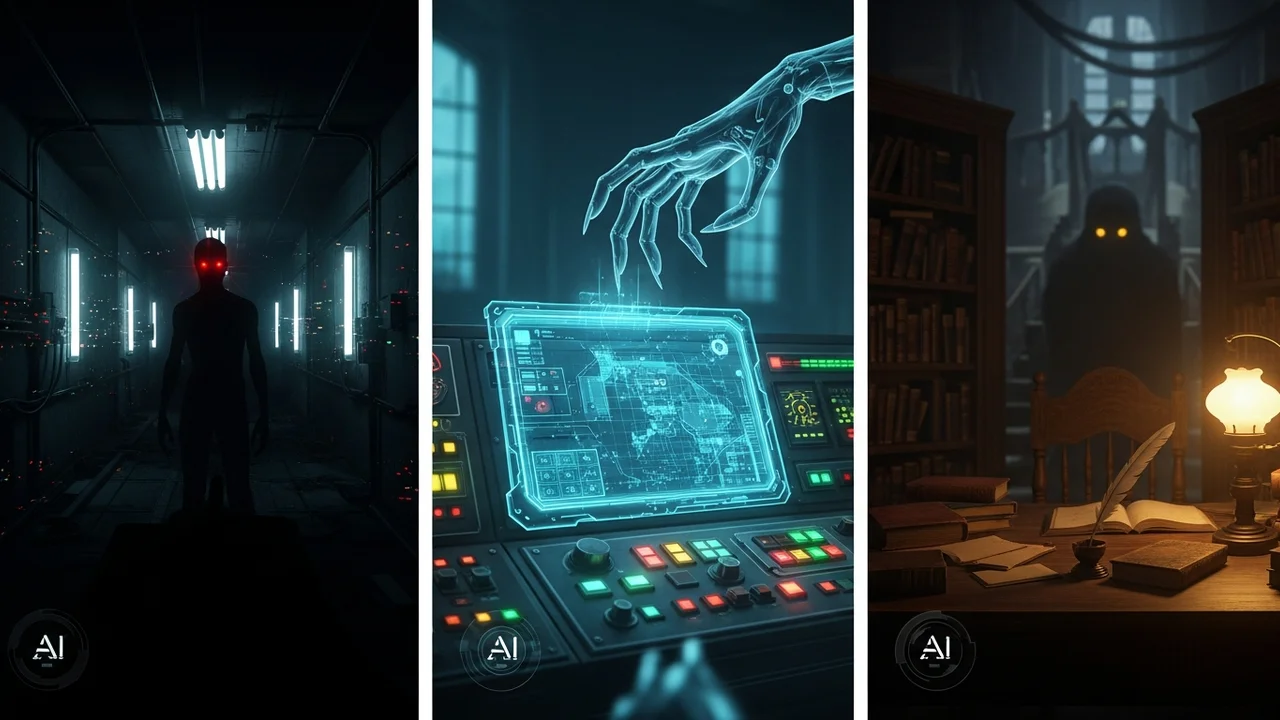
Compare the 3 scariest horror games that use AI to adapt enemy behavior based on player actions for a truly terrifying experience.
Compare the 3 scariest horror games that use AI to adapt enemy behavior based on player actions for a truly terrifying experience.
3 Most Immersive AI Driven Horror Games
If you have ever felt like a horror game was reading your mind, you are probably right. The days of scripted jump scares are fading fast. Today, developers are leaning into AI-driven systems that track your playstyle, your hesitation, and even your panic levels to ensure the monster behind the door is exactly what you fear most. We are looking at three titles that have mastered this, turning the genre into a living, breathing nightmare.
AI Enemy Behavior and Adaptive Horror Mechanics
The core of modern horror is unpredictability. In older games, you could memorize a patrol path. Now, AI agents use machine learning to analyze how you handle stress. If you tend to hide in lockers, the AI learns to check them. If you run blindly, it sets traps. This creates a psychological feedback loop where the game feels like it is hunting you, not just waiting for you to trigger a cutscene. It is not just about graphics anymore; it is about the intelligence of the threat.
Alien Isolation and the Dynamic AI Predator
Alien Isolation is the gold standard for AI-driven horror. The Xenomorph is controlled by two AI systems. The first knows where you are at all times, acting as a director. The second is the actual creature, which receives 'hints' from the director but has to physically search for you. This means the alien learns your habits. If you use the flamethrower too often, it becomes more cautious. If you stay in vents, it starts checking them first. It is a masterclass in tension.
Product Details: Available on PC, PS4, Xbox One, and Switch. Price: $39.99. It is a must-play for anyone who wants to see how a single, intelligent enemy can carry an entire game.
Phasmophobia and Adaptive Ghost AI
Phasmophobia changed the multiplayer horror landscape by giving ghosts a personality. The AI listens to your microphone. If you scream, the ghost hears you. If you say its name, it gets angry. The ghost AI adapts to your team's behavior, choosing when to hunt based on your sanity levels and how much noise you are making. It is terrifying because it feels like the game is actively listening to your real-world reactions.
Product Details: Available on PC and consoles. Price: $13.99. It is incredibly affordable and offers endless replayability because no two ghosts behave exactly the same way.
Left 4 Dead 2 and the AI Director System
While often categorized as an action game, Left 4 Dead 2 is a pioneer in AI-driven pacing. The 'AI Director' monitors the players' health, ammo, and stress levels. If you are doing too well, it spawns a horde. If you are struggling, it might give you a health pack. This keeps the tension high without making the game feel unfair. It is the perfect example of how AI can manage the flow of a horror experience to keep you on the edge of your seat.
Product Details: Available on PC and Xbox. Price: $9.99. It is a classic that proves AI is just as good at managing pacing as it is at creating scares.
Comparing AI Horror Experiences
When you look at these three, you see different philosophies. Alien Isolation is about a singular, persistent threat that learns your specific playstyle. Phasmophobia is about environmental interaction and reacting to the player's real-world input. Left 4 Dead 2 is about the macro-management of the game's intensity. If you want a solo, claustrophobic experience, go with Alien. If you want to play with friends and scream at your monitor, Phasmophobia is the way to go. If you want high-octane, fast-paced survival, Left 4 Dead 2 remains the king.
Future of AI in Horror Gaming
We are only scratching the surface. Imagine a game where the AI generates dialogue based on your previous choices, or where the environment itself changes layout based on your phobias. The technology is moving toward total immersion, where the game is no longer a static piece of software but a dynamic entity that wants to see you fail. Keep an eye on indie developers, as they are currently the ones pushing these AI boundaries the hardest, often creating experiences that feel more 'alive' than big-budget AAA titles.
:max_bytes(150000):strip_icc()/277019-baked-pork-chops-with-cream-of-mushroom-soup-DDMFS-beauty-4x3-BG-7505-5762b731cf30447d9cbbbbbf387beafa.jpg)